The Secret Interior
There are parts of Sweden that international visitors reliably discover – Stockholm, Lapland, the western islands – and there are parts that remain largely in the hands of the Swedes themselves. Småland belongs to the second category. And that is entirely, deliberately the point of going there.
The Land
Covering roughly the same area as Denmark, Småland is the great Swedish interior: a tableland of ancient granite, dense spruce and pine forest, over five thousand lakes and a handful of small cities that punch well above their cultural weight. It is where the glass was made, where IKEA was born, where Astrid Lindgren set her stories, and where several million Swedes summer in wooden cottages by lakesides that have looked more or less the same for a century.
The Glass Kingdom
In a stretch of forest between the cities of Kalmar and Växjö, something unexpected happens. Hidden among the trees, accessible by small roads that feel like they lead nowhere, are the glassworks – hyttor – of the Glasriket, the Kingdom of Glass. Some twenty glass studios survive here, producing handblown and mouth-blown glass of extraordinary quality and artistry. The tradition dates to 1742, when the first glasswork was established in the forest, and the techniques and knowledge have been passed down through families for generations.
The experience of visiting a working glasswork is visceral in a way that few craft traditions can match. The furnaces run at 1100°C. The masters work in practiced silence, rotating the blowpipe, gathering molten glass that glows orange and amber, shaping it with tools and breath into forms of startling delicacy. You can watch from metres away, feeling the heat on your face, as a shapeless blob of molten silica becomes – in minutes – a wine glass, a vase, a sculptural object.
🔥 Visiting the Glass Kingdom
Most glassworks are open to visitors year-round, with demonstrations typically running mornings and early afternoons. Orrefors and Kosta Boda are the most famous names. Glasriket's visitor website maps all the studios. Buying directly from the studio supports the craftspeople and guarantees authenticity. Check opening times before driving out – some smaller studios are seasonal.
The Lakes
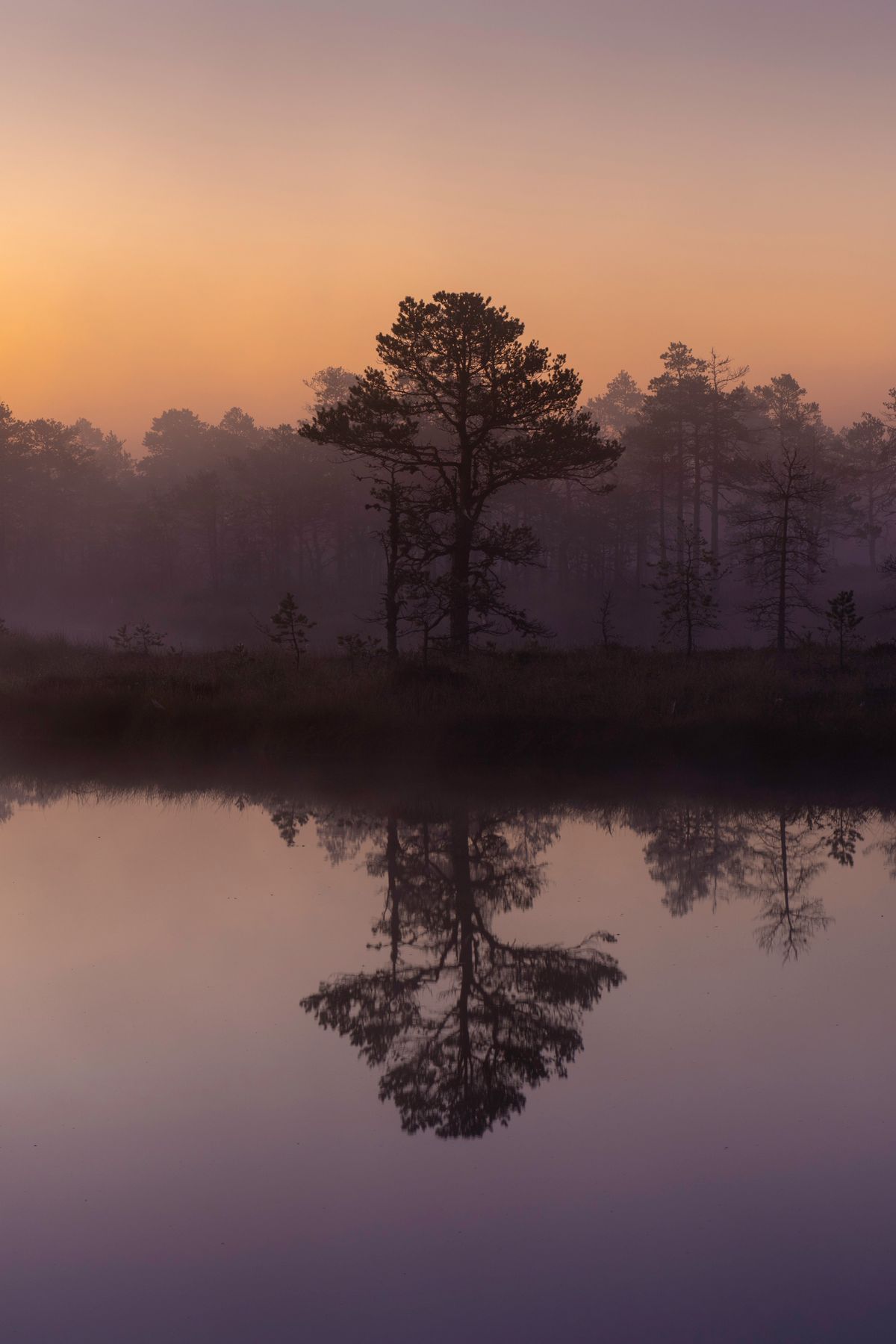
Småland has 5,000 lakes. This number is difficult to visualise until you are driving through the region and realise that you have seen a lake glinting through the trees every two or three minutes for the past hour. They range from small forest pools to Vättern – the second largest lake in Sweden and the sixth largest in Europe, a body of water so large it has its own microclimate and weather system.
Swimming in a Småland lake on a warm July afternoon, surrounded by pine forest with no buildings in sight, is one of the quintessential Swedish experiences. The water is soft, slightly dark from the forest acids, and in smaller lakes surprisingly warm by July. Allemansrätten – the right to roam – means you can swim in any lake you reach. Many of Sweden's most famous wilderness canoe routes run through Småland's lake systems.
🛶 Canoeing in Småland
The Emån river system and the Lake Åsnen area offer some of the best canoe touring in southern Sweden. Canoe hire is available at multiple locations across the region. A multi-day canoe trip – paddling between lakes, wild camping under Allemansrätten on the shores – is one of the most liberating ways to experience Småland's landscapes. No experience necessary for river canoeing.
Astrid Lindgren's World
Astrid Lindgren – author of Pippi Longstocking, Emil of Lönneberga, Ronja Rövardotter and dozens of other books beloved by generations of Swedish children – was born in Vimmerby in Småland in 1907 and never lost her connection to the region. The landscape of her childhood is the landscape of her books: the red wooden farmhouses, the deep forests, the dark lakes, the summer meadows.
Astrid Lindgrens Värld in Vimmerby is a theme park built around her stories and, unusually, manages to be genuinely touching rather than merely commercial. The environments recreate the settings of her books at human scale, and the performances throughout the day bring the characters to life. It works for adults as much as for children because the stories, handled with this care, connect to something real about Swedish identity and the particular quality of Swedish summers.
The house where Lindgren was born, in the village of Näs outside Vimmerby, is now a museum and beautifully maintained. Visiting it, you understand immediately where all those summer descriptions came from.
Växjö: The Eco-City
Växjö, Småland's main city, is worth more than a night. It was the first city in the world to explicitly commit to becoming fossil-fuel free – back in 1996, when such commitments were genuinely radical – and has since built a reputation for thoughtful urban planning, good food and culture that belies its modest size.
The Smålands Museum in Växjö has an excellent glass collection – the best context for a Glass Kingdom visit – and the Emigrants' House tells the story of the mass emigration from Småland to America in the 19th century, a story that connects the region to millions of Americans of Swedish descent. The emigration from Småland was so significant that the lake town of Lindköping gave its name to a neighbourhood of Minneapolis; Astrid Lindgren's grandfather was among those who left.
The Red Cottages
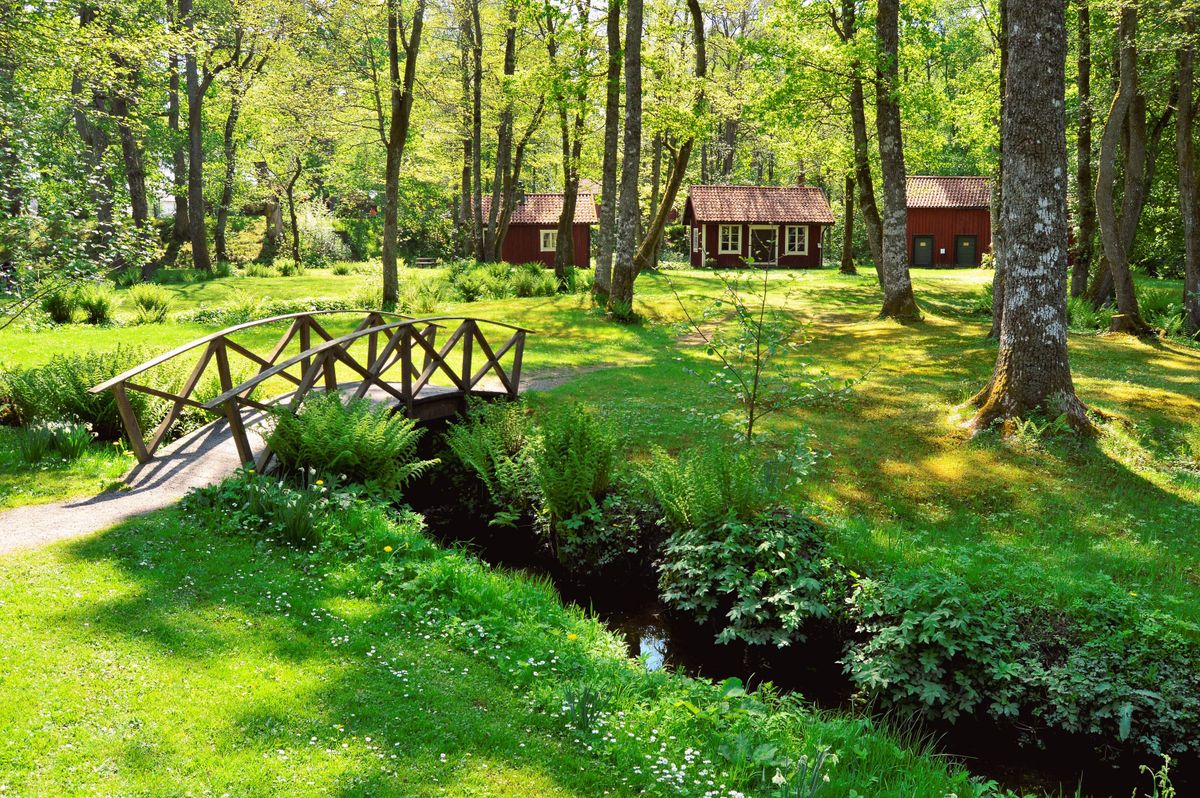
The dominant colour of Småland – and much of rural Sweden – is red. The Falun red paint that covers farmhouses, barns and summer cottages across the Swedish countryside was originally a byproduct of the copper mines at Falun in Dalarna and has been in use since the 17th century. In Småland, against the backdrop of dark pine forest and pale lake water, the red cottages take on a quality of pure pictorial Sweden that is hard to resist and impossible to forget.
Many of these cottages are available for rent as holiday accommodation at very reasonable prices. A week in a red cottage by a Småland lake, with a rowing boat at the dock and a fireplace for cool evenings, is one of the most restorative holidays Sweden offers. It is also one of the least expensive.
🏡 Renting a Stuga in Småland
Swedish holiday cottages (stugor) in Småland are typically rented by the week and include rowing boats, sauna access and full kitchen facilities. Blocket.se and Booking.com list many options. Book ahead for July – the best cottages by the best lakes are taken early. A cottage in late June or August offers the same experience at significantly lower prices.
The Birthplace of IKEA
In the village of Älmhult in Småland, in 1943, a seventeen-year-old named Ingvar Kamprad founded a small mail-order company called IKEA. The company's origins in this deeply rural, resource-poor corner of Sweden shaped its foundational philosophy: make things that work, keep them simple, and never waste anything. The IKEA Museum in Älmhult tells this story with more wit and depth than you might expect, and a visit gives context to an empire that now furnishes a significant proportion of the world's homes.
Best Times to Visit Småland
Småland rewards every season differently. Summer is the classic time – the lakes warm up, the cottages fill, and the days are long enough that you lose track of time. Autumn brings the most dramatic colours: the forest turns gold and copper in September, the mushrooms arrive, and the light through the trees has a quality that photographers obsess over. Winter, with snow settling on the frozen lakes and the spruce trees heavy with white, is austere and beautiful in equal measure. Spring arrives slowly and tentatively, the ice leaving the lakes in April, everything suddenly green and impossibly bright.
The Glass Kingdom: Kosta Boda and the Glassworks
Småland's reputation rests partly on its glass. The region between Växjö and Nybro — the Kingdom of Crystal (Glasriket) — contains seventeen working glassworks, many of them in continuous operation since the eighteenth century. The concentration of skill, the quality of the sand and the historical tradition of the craft make this one of the most significant glass-producing regions in the world.
Kosta Boda is the most famous name — the Kosta glassworks was founded in 1742 and is the oldest continuously operating glassworks in Sweden. Visitors can watch glassblowing demonstrations, access the factory outlet (substantially cheaper than retail) and walk through the design museum. The glass produced here ranges from utilitarian tableware to serious art pieces commanding significant prices internationally.
The smaller glassworks are in some ways more interesting to visit. Places like Pukeberg, Målerås and Bergdala operate at a human scale — you can watch a single glassblower work from start to finish, ask questions freely and buy directly. Some offer half-day courses in basic glassblowing. The Glasriket tourist route connects them all by road through a landscape of birch forest and small lakes that is quintessential southern Sweden.
Astrid Lindgren's Småland
Astrid Lindgren — creator of Pippi Longstocking, Emil of Lönneberga, and a dozen other works that defined Swedish childhood across several generations — was born in Vimmerby in 1907 and grew up in the Småland landscape. Her books draw directly on it: the red farmhouses, the dark forests, the small-town life, the specific quality of Småland summer light.
Junibacken in Stockholm is the more famous Lindgren attraction, but Vimmerby is where the landscape actually is. Astrid Lindgrens Värld (Astrid Lindgren's World) is a theme park based on her characters — primarily aimed at children but experiencing it with the books in mind gives it a different quality. The farm where she was born, nearby, is preserved as a museum with original interiors. The surrounding countryside, with its particular combination of red cottages, birch woods and stone walls, looks precisely as she described it.
Småland at a Glance: What to See Where
| Attraction | Location | Time Needed | Best Month | Entry Cost |
|---|---|---|---|---|
| Kosta Boda glassworks | Kosta, Glass Kingdom | Half day | Year-round | Free (shop/tour extra) |
| Orrefors glassworks | Orrefors, Glass Kingdom | 2–3 hours | Year-round (weekdays) | Free museum entry |
| Astrid Lindgrens Värld | Vimmerby | Full day | June–Aug | ~350 kr adults / ~280 kr children |
| IKEA Museum, Älmhult | Älmhult | 2–3 hours | Year-round | ~150 kr adults |
| Lake Åsnen | Central Småland | Day (kayak/swim) | June–Sept | Free (Allemansrätten) |
| Eriksberg Wildlife Reserve | Blekinge border | Half-full day | May–Sept | ~350 kr/person (safari incl.) |
Mistakes Tourists Make in Småland
❌ Visiting the Glass Kingdom glassworks on a weekend
The glassblowing demonstrations that make the Glass Kingdom worth visiting happen on weekdays when the furnaces are operating. On weekends, the workshops are cold and the shops are open but there's nothing actually happening. Visit Monday through Friday and time your arrival at a studio for mid-morning when demonstrations are typically running. Call ahead if in doubt — Kosta Boda and Orrefors both have visitor information lines.
❌ Skipping Astrid Lindgren's Vimmerby
Astrid Lindgren's World in Vimmerby is often dismissed as a children's theme park by adults travelling without children. It is, in fact, one of the best-realised literary heritage sites in Europe — the landscapes Lindgren described are faithfully recreated and the emotional pull of these stories is something that transcends age. Swedes in their 40s weep at the Pippi Longstocking house. If you grew up with these books, go regardless of whether children are in your party.
❌ Not combining the Glass Kingdom with a lake day
The Glass Kingdom studios are inland among lakes and forest. After a morning of glassworks, the afternoon calls for a swim in one of Småland's thousands of lakes. Lake Åsnen is 20 minutes from Växjö and has excellent wild swimming, canoe hire and beautiful shoreline. The contrast between the heat of the furnace and the cold of a Småland lake at 4pm in August is one of those entirely Swedish combinations that can only be achieved by being in the right place.
Frequently Asked Questions: Småland
What is the Glass Kingdom in Småland?
The Glass Kingdom (Glasriket) is a stretch of forest between Kalmar and Växjö where around 15 glass studios and factories operate, many on sites where Swedish glass has been made for over 250 years. Kosta Boda and Orrefors are the most internationally known. Most studios offer guided tours showing the glassblowing process — watching a master glassblower work molten glass at 1,100°C is one of the more extraordinary things you can see in Swedish industry. Many also have factory outlets where seconds and discontinued pieces sell at substantial discounts.
Where is Astrid Lindgren from?
Astrid Lindgren was born in Vimmerby, Småland, in 1907 and set most of her stories — Pippi Longstocking, Emil of Lönneberga, Ronia the Robber's Daughter — in landscapes directly drawn from her Småland childhood. Vimmerby is home to Astrid Lindgrens Värld (Astrid Lindgren's World), a large theme park based on her stories that draws hundreds of thousands of visitors annually, primarily Swedish families. The park is excellent for children and surprisingly moving for adults who grew up with the books.
Where is IKEA from?
Ingvar Kamprad founded IKEA in 1943 in Älmhult, Småland — a town that remains the operational heart of the company. The IKEA Museum in Älmhult tells the full story and is worth a visit on its own terms, not just for IKEA enthusiasts. The original IKEA store in Älmhult still operates and is a pilgrimage site for design-minded visitors. Kamprad attributed IKEA's famous frugality directly to the culture of Småland — a region historically characterised by poor soil and the necessity of making do.
How many lakes does Småland have?
Over 5,000 lakes — making it one of the most lake-dense regions in Europe. Vättern, the second-largest lake in Sweden, forms Småland's western border. Åsnen and Helgasjön are the most visited within the region. Swimming, canoeing and fishing are all excellent throughout the summer months. The lakes are uniformly clean by European standards — Småland's groundwater is remarkable — and wild swimming is both legal and actively pleasant.
How do I get to Småland?
Trains from Stockholm reach Växjö in about 3 hours and Alvesta in 2.5 hours. Kalmar, on the eastern edge of the region, is 3 hours from Stockholm by train and a natural starting point for the Glass Kingdom and Öland. A car is useful for exploring the interior properly — the glassworks, the lake roads and the smaller villages are difficult without one. Växjö has a small airport with connections to Stockholm and some European cities.