Know Your Destination

Sweden at a Glance

A constitutional monarchy in northern Europe, home to 10.5 million people, leading the world in renewable energy, sustainability and quality of life – and one of the most extraordinary natural environments on Earth.

10.5M Population
450k km² Area
98% Renewable electricity
63% Forest cover
270k Islands
Official nameKingdom of Sweden (Konungariket Sverige)
CapitalStockholm – population 990,000 city / 2.4 million greater area
GovernmentConstitutional monarchy and parliamentary democracy
LanguageSwedish (official) · English spoken near-universally
CurrencySwedish Krona (SEK) · €1 ≈ 11 SEK approx.
LocationNorthern Europe · Shares borders with Norway and Finland · Connected to Denmark by the Öresund Bridge
Extent1,574 km from north to south – longer than the distance from London to Rome
Arctic CircleCrossed at ~66°N – roughly 250km north of Kiruna
Time zoneCET (UTC+1) in winter · CEST (UTC+2) in summer
Life expectancy83 years – among the highest in the world

Geography

Sweden occupies the eastern part of the Scandinavian Peninsula, stretching 1,574 kilometres from the plains of Skåne in the south to the Arctic mountains of Lapland in the north. The country is long, thin and enormously varied: you can drive from a medieval university town in the south to a reindeer herding ground above the Arctic Circle and experience something close to a different world at each end.

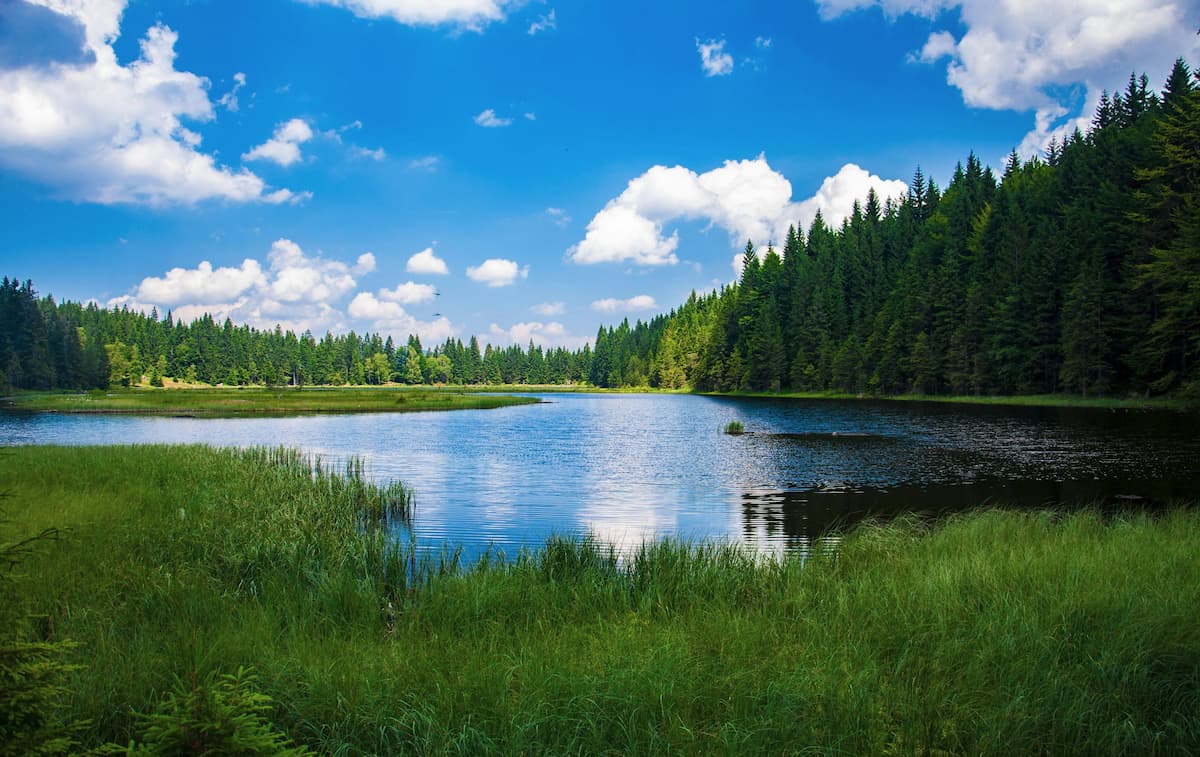
The landscape is defined by the last Ice Age. Glaciers scraped the terrain down to bedrock across most of the country, leaving behind the smooth granite of the west coast, the lake-strewn plains of Götaland and Svealand, and the dramatic fjäll – mountain range – along the Norwegian border in the west. Sweden has over 100,000 lakes, the largest of which – Vänern – is the third largest lake in Europe.

The coastline is extraordinary in its complexity: the Baltic Sea to the east is fringed with the vast Stockholm archipelago of 27,000 islands, while the west coast faces the North Sea across a more open, granite-ribbed shore of fjords and skerries.

People & Culture

Sweden has a population of 10.5 million – modest for a country of its size, which means that vast areas of forest, mountain and coast contain almost nobody at all. The population is concentrated in three metropolitan areas: Stockholm in the east, Gothenburg on the west coast, and Malmö in the south.

Swedish society is built on a few core principles: equality, transparency, environmental responsibility and the philosophy of lagom – roughly translated as "just the right amount." It is a culture that values quality over excess, nature over artifice, and substance over show.

English proficiency in Sweden is among the highest in the world for non-native speakers. You can travel the entire country without speaking a word of Swedish and be understood everywhere. Swedes are reserved on first meeting but genuinely warm once contact is made – and unfailingly helpful to curious visitors.

The indigenous Sami people have lived in northern Scandinavia for thousands of years. Their culture – reindeer herding, traditional crafts, the unique joik singing tradition – is woven into the identity of Swedish Lapland and deserves respectful engagement from every visitor.

Stockholm

Stockholm was founded in 1252 on a small island where Lake Mälaren meets the Baltic Sea – a strategic position that made it the natural capital of a maritime trading nation. Today the city spreads across 14 islands connected by 57 bridges, with a historic old town (Gamla Stan) that has been continuously inhabited for 750 years.

It is consistently ranked among the world's most liveable cities. The public transport is excellent, the cycling infrastructure world-class, the food scene genuinely exciting, and the museums – Vasa, ABBA, Fotografiska, Skansen – among the best in northern Europe. The archipelago begins 30 minutes by boat from the city centre.

Stockholm is also a global technology hub – Spotify, Klarna, King and Mojang (Minecraft) were all founded here, giving the city a creative, entrepreneurial energy that coexists naturally with its deep historical character.

The Swedish Mountain Range – Fjällen

The Scandinavian Mountains – Fjällen in Swedish – run the entire length of the Norwegian border for over 800 kilometres, forming the backbone of the peninsula. On the Swedish side, the mountains are rounded, ancient and vast: not sharp alpine peaks but wide-shouldered massifs rising to 2,100 metres at Kebnekaise, Sweden's highest point.

The mountain landscape above the treeline – the fjällhedar – is an Arctic ecosystem of dwarf birch, reindeer moss, cloudberries and Arctic wildflowers. In summer it is one of the most beautiful walking environments in Europe. In winter, heavy snow and reliable cold make it one of Scandinavia's premier ski destinations, with Åre the flagship resort.

The Kungsleden (King's Trail) traverses the finest sections of the Swedish fjäll for 440 kilometres from Abisko south to Hemavan. Mountain huts operated by the Swedish Tourist Association make it accessible even for less experienced hikers.

🌍 Sweden's Green Energy Revolution

One of the most sustainably powered nations on Earth – and visiting here means your travel footprint is genuinely lower than almost anywhere else.

💧 98%

Renewable Electricity

Sweden generates approximately 98% of its electricity from renewable sources. Hydropower provides the backbone – around 40% – while wind energy has grown rapidly to over 20% and is still expanding. Nuclear provides a further 30%, acting as baseload to support the variable renewables. The result: one of the cleanest electricity grids in the world. When you charge your EV, use the metro or turn on a hotel room light in Sweden, almost no fossil fuels are involved.

🏙️ 90%

District Heating

Virtually every city and town in Sweden is heated by district heating – a centralised system that distributes heat through underground pipe networks to homes, offices and public buildings. Around 90% of all multi-family housing in Sweden is connected. The heat sources are predominantly renewable or recovered: biomass, waste incineration, industrial surplus heat and increasingly heat pumps drawing on lakes and sea water. Stockholm's district heating system alone heats over 800,000 apartments and is powered almost entirely without fossil fuels.

🔄 43%

Heat Pumps in Homes

Sweden has one of the highest rates of heat pump adoption in the world. Ground-source heat pumps – which extract geothermal energy from boreholes drilled into bedrock – heat approximately 43% of Swedish single-family houses. Air-source pumps cover much of the rest. The technology was pioneered in Sweden in the 1970s following the oil crisis and has been refined for decades. Today, most Swedish homes use no fossil fuels at all for heating – a remarkable achievement that makes the country a global model for residential decarbonisation.

🚆 100%

Electrified Rail Network

Sweden's entire main rail network is electrified and powered by renewable electricity. Travelling between Swedish cities by train produces a fraction of the carbon of flying and, on Sweden's grid, almost none. The overnight train from Stockholm to Kiruna – 17 hours through the boreal forest and into the Arctic – is powered entirely by clean electricity. Sweden is also rapidly expanding its rail network, with several new high-speed lines under development to further reduce flight dependency for domestic and Nordic travel.

🔋 #1

EV Leadership

Sweden consistently ranks among the top nations globally for electric vehicle adoption, with EVs representing over 60% of new car sales in recent years. The charging infrastructure reflects this: fast chargers are found at virtually every motorway service station, supermarket car park and major tourist destination. For the EV driver, Sweden is one of the easiest countries in Europe to road trip – the combination of dense charging, renewable electricity and empty roads makes it an ideal destination.

🌲 63%

Forest as Carbon Sink

Sweden is 63% forested – one of the highest proportions in Europe – and its forests are actively managed as a carbon sink. Swedish forestry law requires replanting after every harvest, and net forest volume has increased consistently for a century. The boreal forests of northern Sweden store vast amounts of carbon and are home to biodiversity that includes wolf, bear, lynx, wolverine and moose. Visiting and enjoying these forests is a direct argument for their protection.

🛡️ Safety in Sweden

Consistently ranked among the safest countries in the world for travellers.

🌍 Top 10

Global Peace Index

Sweden ranks among the top 10 safest countries on Earth on the Global Peace Index. Political stability is high, armed conflict essentially nonexistent, and the rule of law is robust. As a traveller, you will encounter a society where institutions work, police are trusted, and disputes are resolved through legitimate channels.

🚶 Very safe

Safe for Solo Travel

Sweden is one of the best countries in the world for solo travellers – including solo women. Cities are well lit, public transport runs late, and the culture of minding one's own business extends to letting travellers go about their way without harassment. It is normal and entirely safe to hike, camp and travel alone across the country, including in remote areas.

🏥 World class

Healthcare & Emergency Services

Sweden's emergency services and healthcare system are among the best in the world. Emergency response times are excellent across most of the country. EU citizens receive emergency treatment under the European Health Insurance Card. Non-EU visitors should carry travel insurance, though the care received will be to a very high standard. Pharmacies (apotek) are widespread and well stocked.

🔒 Low crime

Low Violent Crime

Violent crime in Sweden, particularly as it affects tourists, is very low. Pickpocketing in crowded areas of Stockholm and Gothenburg warrants the same awareness you would apply in any major city, but robbery and assault of tourists is rare. Rural and wilderness areas of Sweden are essentially crime-free. The country has strong gun control laws and personal safety in everyday life is taken for granted by residents.

⚖️ #3 in EU

Rule of Law & Transparency

Sweden consistently ranks in the top three globally on Transparency International's Corruption Perceptions Index – meaning effectively zero corruption in public life. The legal system is independent, efficient and impartial. Consumer protections are strong. If something goes wrong – a cancelled flight, a dispute with a vendor – the mechanisms to resolve it work reliably. You are travelling in a country where the rules are followed.

🌐 NATO member

Political Stability

Sweden joined NATO in 2024 after over 200 years of military non-alignment, reflecting the country's decision to anchor itself firmly in the Western security alliance. The political system is a stable parliamentary democracy with strong institutions and free press. There is no meaningful risk of political instability, civil unrest or government breakdown. Sweden has been at peace continuously since 1814 – over 200 years.

The Swedish Economy

Sweden has one of the strongest economies in Europe relative to its population size. With a GDP of approximately €570 billion (2024), it ranks as the 8th largest economy in the EU – ahead of countries like Austria, Denmark, Finland and Portugal, despite having a relatively modest population of 10.5 million. GDP per capita is among the highest in Europe at around €54,000, placing it consistently in the top five EU member states by this measure.

The Swedish economic model – sometimes called the "Nordic model" – combines high levels of free-market competition and trade openness with a generous social safety net, strong worker protections and high levels of public investment in education and infrastructure. It is an economy that produces globally competitive companies while maintaining some of the lowest inequality levels in the developed world.

Sweden joined the European Union in 1995 but retained its own currency, the Swedish Krona (SEK). The economy is highly export-oriented: manufactured goods, machinery, vehicles, pharmaceuticals and technology products dominate exports. Sweden punches significantly above its weight in global innovation – it produces more unicorn tech companies per capita than any country except the United States.

Sweden vs Europe: Economic Scale

Country GDP (€bn) GDP/capita
Germany€4,100bn€49k
France€2,800bn€42k
Italy€2,100bn€36k
Spain€1,400bn€30k
Netherlands€1,050bn€59k
Poland€740bn€20k
🇸🇪 Sweden€570bn€54k
Austria€470bn€52k
Denmark€380bn€64k
Finland€280bn€50k

🏢 Sweden's World-Famous Companies

A country of 10.5 million that has produced an extraordinary number of globally dominant brands.

🛋️

IKEA

Founded in 1943 in Småland by Ingvar Kamprad. The world's largest furniture retailer, operating over 460 stores in 62 countries. Revenues exceed €44 billion annually. The flat-pack concept and the meatball café are among the most recognisable retail experiences on Earth. IKEA's ethos – democratic design, functional simplicity, low prices – is deeply rooted in the Swedish concept of lagom.

🔧

Volvo

Founded in Gothenburg in 1927, Volvo has been synonymous with automotive safety for a century – it invented the three-point seat belt and gave the patent away freely to the entire industry. Volvo Cars (now owned by Geely) and Volvo Trucks (independent) remain among the most trusted automotive brands in the world. Volvo's focus on electrification and safety continues to define the industry.

🎵

Spotify

Founded in Stockholm in 2006 by Daniel Ek and Martin Lorentzon. The world's largest audio streaming platform with over 600 million monthly active users across 180+ markets. Spotify transformed how the world listens to music, podcasts and audio content, and remains one of Europe's most valuable technology companies. Its Stockholm origin is a point of quiet national pride.

📱

Ericsson

Founded in Stockholm in 1876, Ericsson is one of the oldest and most globally influential technology companies in the world. It provides the telecommunications infrastructure – particularly 5G networks – that connects billions of people globally. Ericsson holds more 5G patents than any other company, and its equipment underpins mobile networks across 180 countries. A true Swedish industrial giant.

💳

Klarna

Founded in Stockholm in 2005, Klarna pioneered the "buy now, pay later" payment model and became Europe's most valuable private fintech company. With over 150 million active consumers and 500,000 merchant partners globally, Klarna reshaped how e-commerce payments work and helped establish Stockholm as one of Europe's premier technology startup ecosystems.

🎮

Minecraft / Mojang

Minecraft was created by Markus "Notch" Persson in Stockholm and released by Mojang in 2011. It became the best-selling video game of all time, with over 300 million copies sold. Microsoft acquired Mojang in 2014 for $2.5 billion. The game is played by hundreds of millions of people across every platform and age group, making it one of the most culturally influential products Sweden has ever produced.

🏦

Nordea & Svenska Handelsbanken

Nordea is the largest financial services group in the Nordic region, with assets exceeding €580 billion and operations across Europe and beyond. Svenska Handelsbanken, founded in Stockholm in 1871, is consistently ranked among the world's most financially stable banks. Together they represent a Swedish banking sector known for its conservatism, long-term thinking and financial robustness.

⚙️

SKF & Atlas Copco

SKF, founded in Gothenburg in 1907, is the world's leading manufacturer of bearings and seals – the components inside virtually every rotating machine on Earth. Atlas Copco, founded in Stockholm in 1873, produces industrial tools, compressors and mining equipment used across 180 countries. Both are exemplars of the deep Swedish tradition of precision industrial manufacturing that punches far above national scale.

💊

AstraZeneca & Alfa Laval

AstraZeneca – the global pharmaceutical giant behind treatments for cancer, heart disease, respiratory conditions and the Oxford-AstraZeneca COVID-19 vaccine – was born of a merger that includes Sweden's Astra. With revenues exceeding $45 billion, it is one of the world's top five pharmaceutical companies. Alfa Laval, from Lund, is the global leader in heat transfer, separation and fluid handling technology – a quiet giant with operations across 100 countries.

Climate & Seasons

Sweden's climate varies enormously from south to north. Malmö in the south has a similar climate to northern Germany or the Netherlands – mild winters, warm summers, reliable rainfall throughout the year. Stockholm has cold, snowy winters and warm, sunny summers with long days. Kiruna in Lapland has Arctic conditions: temperatures below −30°C in January, midnight sun from late May to mid-July, and the Northern Lights from September through March.

This variety is what makes Sweden so rewarding to visit across different seasons. The country offers genuinely different experiences – and genuinely different landscapes – in each of its four seasons, unlike many southern European destinations which are simply hot in summer and cool in winter.

Why Sweden is a Climate-Conscious Choice

Choosing Sweden as a holiday destination is, in itself, an environmentally meaningful decision. You are visiting a country that heats its cities without fossil fuels, generates its electricity from renewable sources, powers its trains on clean energy and has built the infrastructure for electric transport that the rest of the world is still trying to replicate.

You are also visiting one of the few countries where your tourist spending directly supports the preservation of vast natural ecosystems. Sweden's forests, lakes and mountain wilderness exist partly because the Swedish state and public have chosen to protect them – and tourism is an argument for continuing that protection.

Travel here, take the train, charge your car on the renewable grid, eat locally and use Allemansrätten to explore on foot. This is what low-impact travel actually looks like.