The Comparison
Everyone knows Tuscany. Rolling hills, golden fields, long lunches in the sun. What fewer people know is that Sweden has its own version – and it's called Österlen. Located at the southeastern tip of Skåne, Sweden's southernmost county, Österlen is a landscape of gentle farms, whitewashed fishing villages, wild apple orchards and beaches that look like they belong somewhere far more expensive.
International tourists rarely find it. Which is, honestly, part of the charm.
What Makes Österlen Special
The Landscape
Österlen occupies a small corner of Sweden that feels entirely apart from the rest of the country. The landscape is softer here – rolling rather than dramatic. Fields of wheat, barley and the electric-yellow rapeseed that turns the countryside neon in late May and June. Apple orchards stretch for miles around Kivik, home to Sweden's most celebrated cider tradition. Old stone churches sit in villages that haven't changed their shape in centuries.
In summer, the quality of light in Österlen becomes something artists have obsessed over for generations. The painter Nils Kreuger came here in the late 1800s and never quite left. The Österlen Arts Trail today connects dozens of galleries and studios across the region – it's one of the densest concentrations of working artists in Scandinavia.

The Coastline
Österlen's coastline is a string of distinct personalities. Brantevik is a tiny fishing harbour with painted wooden boats, a legendary fish smokery, and a harbour café where you eat whatever was caught that morning. Simrishamn, the region's main town, has a well-preserved medieval centre and a harbour busy with ferries and fishing vessels.
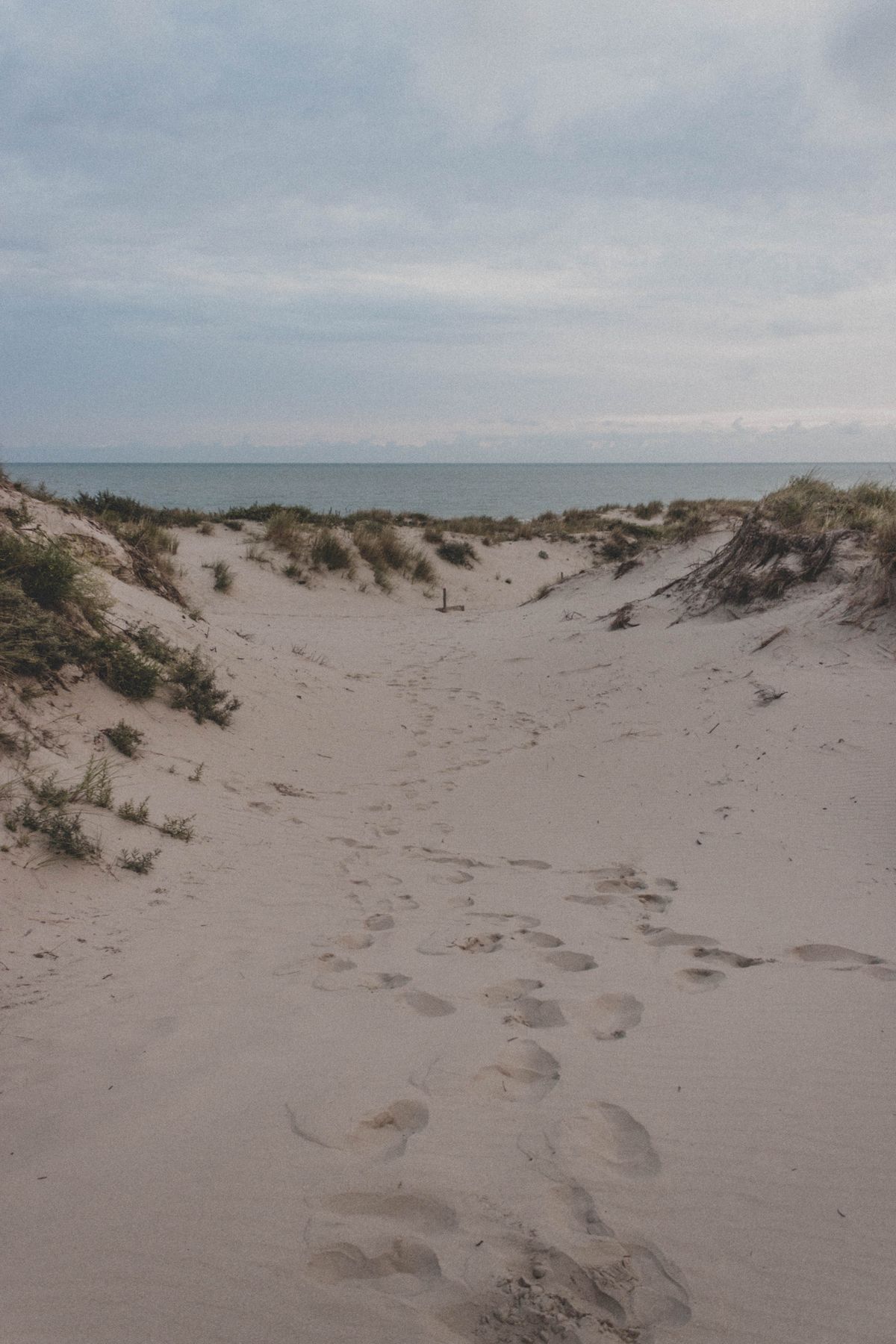
Further along the coast, Sandhammaren is one of Sweden's most beautiful beaches – a vast sweep of white sand and dunes at the very southeastern corner of the country, where the Baltic and the western sea meet. On a clear summer day, the water is a shade of blue that feels implausible for Scandinavia.
🏖 Best Beaches in Österlen
Sandhammaren for dramatic dunes and clearest water. Vik for a more sheltered, family-friendly option. Käseberga has the famous Ales Stenar stone ship monument directly above the beach – worth the short climb for the view.
Ales Stenar: Sweden's Stonehenge
On a bluff above the village of Kåseberga stands Ales Stenar – a 67-metre long stone ship monument built from 59 massive boulders sometime around 600 AD. The views over the sea from here are extraordinary, and in the evening the setting sun aligns perfectly with the stones during summer solstice. It's one of Sweden's most significant prehistoric monuments and yet it draws a fraction of the visitors of comparable sites elsewhere in Europe.
The Food Scene
For a rural area, Österlen punches absurdly above its weight in food. The combination of fertile farmland, excellent fishing and a long tradition of small-scale producers has created a food culture that rivals much of what you'd find in major cities.
Kivik's apple cider is the flagship – the Kivik Apple Market in August is worth building a trip around. But there are also excellent cheesemakers, a growing natural wine scene, farm-to-table restaurants that source everything within a few kilometres, and bakeries that take sourdough seriously in a way that would impress San Francisco.
🍽 Where to Eat in Österlen
Brygghuset in Brantevik for fresh fish right at the harbour. Café Rörum for home-baked pastries and garden lunches. Kiviks Musteri for cider tasting and the famous apple market in late August. Look for farm shops (gårdsbutik) on any country road – they're almost always excellent.
Getting There and Around
Österlen is easiest reached by car. Malmö is about 90 minutes away, Copenhagen around 2 hours (including the bridge crossing). Ystad, the main rail hub for the region, is served by direct trains from Malmö and has good connections from Stockholm via Copenhagen. From Ystad, you'll want a car to explore properly – the best parts of Österlen are scattered across country lanes.
The region is extremely well suited to cycling. The roads are flat, the traffic is light and the distances between villages are manageable. Several companies in the region hire out bikes, and the coast route from Ystad to Simrishamn is one of the most pleasant half-day rides in all of Sweden.
The Right Time to Visit Österlen
Art, Ceramics and the Österlen Studio Trail
Österlen has attracted artists since the early twentieth century, drawn by the quality of the light — the same flat, clear luminosity that makes the landscape so distinctive to paint. The region now has one of the densest concentrations of working studios, galleries and craft workshops in Scandinavia.
The Österlen Konsthall in Simrishamn is the anchor of the scene: a serious contemporary art space that runs ambitious exhibitions through the summer. But the more rewarding experience is the studio trail — a loose network of working artists who open their spaces to visitors on weekends and during the summer months. Potters, glassblowers, weavers, painters and furniture makers work in converted barns and farmhouses scattered across the countryside. There is no single map; ask at the tourist office in Simrishamn or pick up the printed studio guide, published each spring.
The ceramics tradition is particularly strong. Several genuinely good studio potters work in the area, influenced by both Scandinavian minimalism and the earthiness of the local clay and landscape. If you visit in July or August, you will almost certainly stumble on an open studio by accident.
The Apple Orchards and Local Producers
Österlen's microclimate — warmer and sunnier than the rest of Skåne — supports Sweden's most productive apple-growing region. The orchards come into spectacular blossom in late April and early May; by September they are heavy with fruit. Several producers run pick-your-own operations and small farm shops selling apple juice, cider, vinegar and preserves made from varieties you will not find elsewhere.
The local food economy is unusually rich. Österlen has independent bakeries, cheese makers, smokehouses and honey producers operating at a scale that suggests the region has kept a relationship with its agricultural landscape that more developed tourist areas have lost. The Brösarps market on summer Saturdays brings many of them together in one place.
📅 Best Months for Österlen
Late May for apple blossom and the first warm days without summer crowds. July for beach swimming, open studios and long evenings. September for harvest, apple picking, empty coastline and the most extraordinary quality of light. Avoid the single week of peak Swedish summer (late July) when the roads between Simrishamn and Ystad fill up.
June through August is peak season, with July the most popular month. Late June is ideal: the rapeseed is still yellow in the fields, the days are long (around 17–18 hours of daylight this far south), the beaches warm up and the summer vegetables arrive at the farm shops. August brings the apple harvests and cider festivals. September is the locals' secret – the crowds thin out, the light turns golden and the countryside takes on the first hints of autumn.
Walking the Österlen Coast: Skåneleden
The Skåneleden long-distance footpath runs along the Österlen coastline for several stages, connecting the fishing villages and nature reserves between Ystad in the west and Skillinge in the east. The coastal sections follow clifftops above the Baltic, drop down to sandy bays, and pass through the kinds of small harbours — painted wooden boats, stacked lobster cages, a café that only opens in July — that look as though they were arranged for a photograph and turn out to be real.
The complete coastal section takes two to three days walking at a comfortable pace. Individual day sections are easily accessible by bus from Ystad or Simrishamn. The stretch between Kåseberga (home of Ales Stenar) and Skillinge is the most dramatic: high chalk cliffs, views south toward Bornholm on clear days, and a path that alternates between cliff edge and sheltered cove in a way that makes it difficult to keep to a schedule.
Walking in September rather than July gives you the same coastline without other walkers. The water is still warm from summer — Baltic sea temperature in September typically runs 16–18°C, perfectly swimmable. The light is sharper than in July. The accommodation in the villages is easier to book and half the price.
Where to Eat in Österlen
Österlen has quietly become one of Sweden's most interesting food destinations. The combination of fertile farmland, a fishing coast and a community of artists and craftspeople has produced a restaurant culture that cooks with uncommon seriousness about local ingredients.
🍽️ Restaurant Picks
Brösarps Gästgivaregård — The gastronomic anchor of inland Österlen. Set in a centuries-old inn, with a kitchen that treats the local lamb, root vegetables and Baltic fish with real skill. Weekend dinners only. Mains 280–380 kr. Book ahead.
Café Nils, Kivik — The definitive Kivik lunch stop. Set in an orchard above the village, serving apple juice, open sandwiches and seasonal plates. Everything on the table has come from within a few kilometres. Around 120–150 kr for lunch.
Äppelriket, Kivik — The large apple estate outside the village sells its own ciders and juices from a farm shop and café. Worth visiting in August when the press is running and fresh-pressed juice is available. Not a restaurant but unmissable.
Simrishamns Konditori — Old-fashioned bakery in the harbour town's centre. The best place for a coffee and pastry in the area. Around 50–80 kr for fika.
Where to Stay in Österlen
🏨 Where to Stay
Brösarps Gästgivaregård — Rooms attached to the restaurant above. Quiet, characterful, in the middle of the countryside. Doubles from around 1,400 kr.
Ystads Saltsjöbad — A grand old bathhouse hotel on the beach at Ystad, western Österlen. The spa and sea pool are excellent. Doubles from 1,800 kr — a treat rather than everyday accommodation.
Gårdshotell in the interior — Several working farms in the Österlen interior rent rooms and small cottages. These give the most authentic experience of the landscape. Search "gårdshotell Österlen" on Booking.com. Typically 900–1,300 kr per night.
Kåseberga Camping — Basic campsite right below Ales Stenar. Wake up, walk five minutes, have the monument almost to yourself before 8am. Pitches from 200 kr.
A 3-Day Österlen Itinerary
📅 Day 1 — Ystad and the Western Coast
Arrive at Ystad (direct train from Malmö in 1 hour, from Stockholm in 4.5 hours). Walk the medieval town — Ystad's timber-frame houses and cobbled streets are almost as well-preserved as Visby without the tourist crowds. Drive east along the coast to Kåseberga in the afternoon. Walk up to Ales Stenar at 5pm when the day visitors have left. The light on the stones and the view south to the Baltic at this hour is exceptional. Stay near Kåseberga or at Brösarp.
📅 Day 2 — Kivik and the Apple Country
Morning at the Kivik Apple Estate — visit the press building and farm shop. Walk through the orchard rows if the apple blossom is out (late May) or the fruit is ripening (August). Drive south to the coast at Kivik harbour — the Bronze Age burial cairn Kiviksgraven is just north of the village and rarely visited. Lunch at Café Nils. Afternoon: explore the studio trail — pick up the map from any local tourist office and visit 2–3 open artist studios. Return via Simrishamn.
📅 Day 3 — Walking the Coastal Path
Walk the best section of Skåneleden between Kåseberga and Skillinge (about 14km, allow 4–5 hours with stops). The cliffs above the Baltic, the chalk bluffs and the small fishing coves make this one of the best coastal walks in southern Sweden. Arrange a taxi pickup at Skillinge or walk back. Lunch at the fish smokery in Skillinge. Return to Ystad for your train.
Mistakes Tourists Make in Österlen
❌ Not having a car
Österlen is a rural region without useful public transport between villages. The bus from Ystad runs to Simrishamn but that's it. The studio trail, the apple orchards, the coastal path trailheads and the farm shops between them require a car. If you don't drive, base yourself in Ystad — which is walkable and has good connections — and use it as a day-trip hub for the coastal walk sections accessible by bus.
❌ Visiting in late July without booking
Österlen is a genuinely small region. The handful of good restaurants — Brösarps Gästgivaregård in particular — have limited covers and book out weeks in advance in peak summer. The best farm guesthouses fill completely. Unlike Gotland or Bohuslän, there isn't a large hotel infrastructure to absorb overflow. Book everything before you leave home if you're visiting in July, or come in June or September when the same quality is available without the competition.
❌ Missing Ales Stenar at the wrong time
Ales Stenar is one of the most significant ancient monuments in Scandinavia — 59 large sandstone boulders arranged in a ship shape on a hilltop above the Baltic, dating from around 600 AD. It's also photographed with car parks and other visitors in the background for most of the day in July and August. Visit at dawn (before 7am) or after 7pm in summer: the monument is empty, the light is low and raking across the stones, and the view south over the Baltic is extraordinary. Getting the timing right makes all the difference.
Österlen Quick Reference
| Highlight | Location | Best Time | Time Needed |
|---|---|---|---|
| Ales Stenar | Kåseberga | Dawn or dusk | 1–2 hours |
| Apple orchards (Kivik) | Kivik | May (blossom) or Aug (harvest) | Half day |
| Studio trail | Throughout region | August | Full day |
| Skåneleden coastal walk | Kåseberga–Skillinge | June–Oct | Full day (14 km) |
| Brösarps Gästgivaregård | Brösarp (inland) | Weekends (dinner only) | Evening |
Frequently Asked Questions: Österlen
How do I get to Österlen?
Ystad is the main gateway — direct trains from Malmö (1 hour) and Copenhagen (1.5 hours via Malmö). From Stockholm the train takes about 4.5 hours. Within Österlen, a car is strongly recommended. The rural roads are quiet but bus services between villages are infrequent. Cycling is possible from Ystad east along the coast — the terrain is flat and the distances manageable.
What is Ales Stenar?
Ales Stenar is a 59-metre-long ship-setting — an ancient monument made of 59 large sandstone boulders arranged in the shape of a ship — on a hilltop above the Baltic coast near Kåseberga. It dates from around 600 AD, though the site may have been used for much longer. It is Sweden's largest and best-preserved ship-setting, comparable in scale and mystery to Stonehenge and equally atmospheric when visited outside peak hours.
Is Österlen good for families?
Excellent. The beaches are calm and shallow, particularly around Sandhammaren and the east coast. The cycling is flat and suitable for children. Farm shops, apple estates and the Ales Stenar monument all work well with kids. Accommodation tends to be spacious and self-catering options are plentiful. The pace is unhurried in a way that southern Sweden tourist traps are not.
What is the Österlen Studio Trail?
Over 200 artists and craftspeople live and work in the Österlen region, and many open their studios to visitors during summer — particularly in August. The trail publishes a map (available from local tourist offices and online at osterlen.se) with studio locations and opening times. Ceramicists, glassblowers, painters and textile artists all participate. It's one of the most distinctive cultural experiences in rural Sweden and costs nothing to explore.