The First Foraging Trip
I grew up in a city. The closest I got to foraging was picking blackberries from a bush at the end of a suburban garden path. So when a Swedish friend handed me a wicker basket, pointed into a birch forest outside her family's cottage near Sundsvall, and said "go and find dinner," I was not immediately confident.
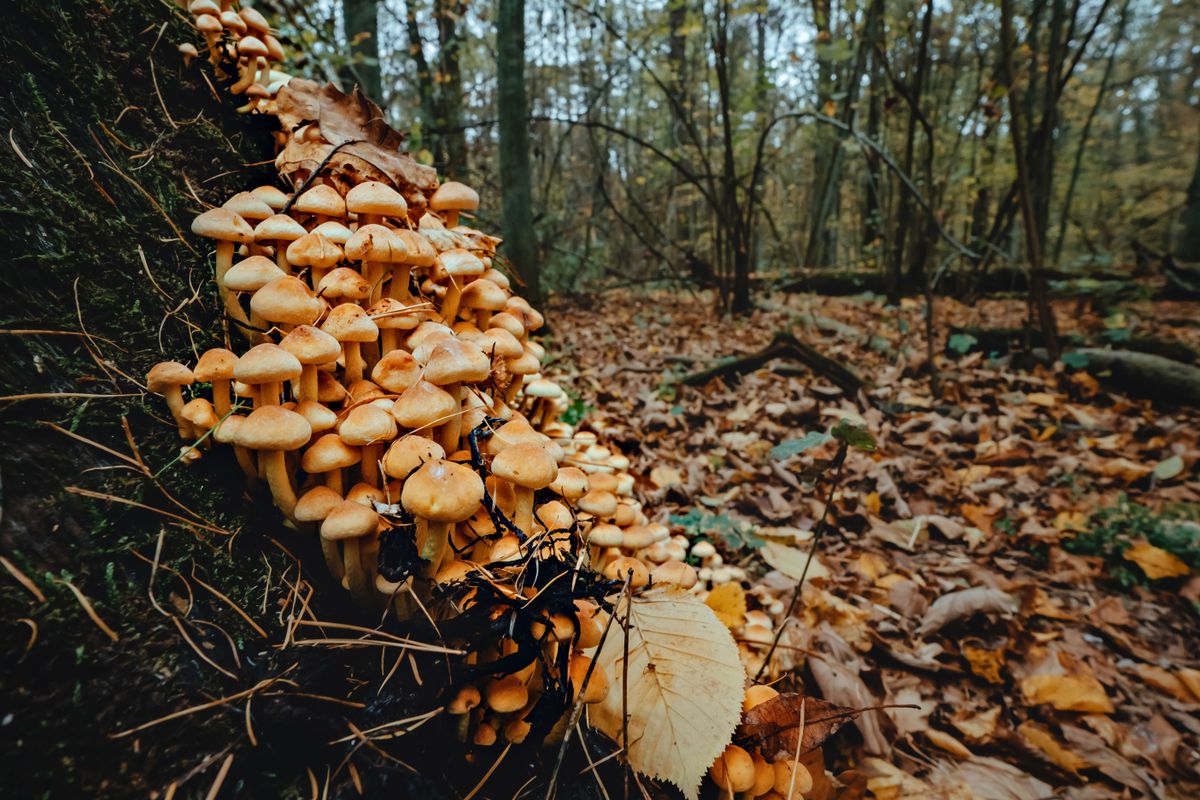
Three hours later I came back with two kilograms of chanterelles. Gold-yellow, trumpet-shaped, smelling of apricot and earth and something that I can only describe as the smell of a Swedish forest in late August distilled into fungal form. My friend's mother made them into a sauce. We ate them on toast with a glass of cold beer on a wooden deck over a lake, in the hour when Swedish summer evenings turn everything honey-coloured. I have been back to Sweden every August since.
Foraging in Sweden is not a niche hobby or a fashionable restaurant concept. It is a quiet, persistent aspect of how Swedish people relate to the landscape they live in. Families have favourite spots, passed down like property. Children learn species identification before they learn to read music. And Allemansrätten – the right to roam – makes every square kilometre of forest, field and coastline legally accessible to anyone who wants to use it.
Chanterelles: The Gold Standard
Kantarellen is the Swedish chanterelle, and it is the king of the Swedish foraging calendar. It appears from July onwards – sometimes as early as late June in a warm year – and peaks through August and into September. You find them under birch and pine, often in mossy ground with partial shade, often in places where the forest floor transitions between tree species.
They are almost unmistakable to anyone who has seen them once: egg-yolk to golden yellow, with false gills that run down the stem rather than meeting it cleanly, and a mild, distinctly fruity smell. The only common lookalike, the false chanterelle (Hygrophoropsis aurantiaca), is more orange, has true gills, and tends to grow in conifer forests rather than mixed woodland. False chanterelles are mildly toxic at worst. But you should learn to tell them apart before eating anything – join a guided walk first.
Good chanterelle years happen after warm, damp summers. Bad years happen after drought. Locals track the conditions obsessively from June onwards. Regional Facebook groups, Swedish foraging forums, and the apps Naturkartan and iNaturalist provide community sighting maps that are remarkably accurate. If you arrive in late August without having checked, ask at your accommodation – anyone with a connection to the local area will know whether it's been a good year.
🧺 What to Bring
A wicker basket is traditional and genuinely functional – it lets spores fall through the weave as you walk, spreading them for future seasons. A small knife to cut cleanly at the stem (pulling damages the mycelium). A soft brush for cleaning. Knee-high rubber boots for wet ground. And the identification app iNaturalist on your phone, which uses photo recognition to suggest species – treat it as a first guess, not a final answer.

Berries: The Long Season
The Swedish foraging year begins with wild strawberries (smultron) in June – tiny, intensely sweet things that you find on south-facing slopes and forest edges, and that disappear in your mouth before you can quite register having eaten them. They are almost never found in any quantity; they are a tasting, not a harvest.
Blueberries (blåbär) arrive in July across most of the country and continue through August. Swedish wild blueberries are smaller than the cultivated varieties you know from supermarkets but so much more intensely flavoured that the comparison feels unfair. They stain everything they touch a deep purple-black. Your fingers, your lips, the inside of your basket, eventually your shirt. This is not considered a problem.
Lingonberries (lingon) ripen in August and September and are arguably the most culturally important berry in Sweden – they accompany everything from meatballs to game to pancakes, in the form of the raw-stirred jam called rårörda lingon. They're found across the country in heather and lichen-rich pine forests, often growing in carpets that cover entire hillsides. Harvesting by hand is slow; most serious pickers use a berry rake, a comb-like tool that strips berries from the low shrubs in one pass.
Cloudberries (hjortron) are the Arctic luxury item of the Swedish berry world. They grow only in the bogs and marshes of northern Sweden – principally in Norrland and Lapland – and ripen in late July. Golden-amber when ripe, they taste like a cross between raspberry and apricot with an acidic edge, and they're used in jams, liqueurs and with whipped cream in the classic Swedish dessert hjortronsyllt med grädde. Picking spots are guarded with the same secrecy that mushroom hunters apply to their chanterelle patches. If someone tells you where to find cloudberries, consider it a significant act of trust.
The Best Regions
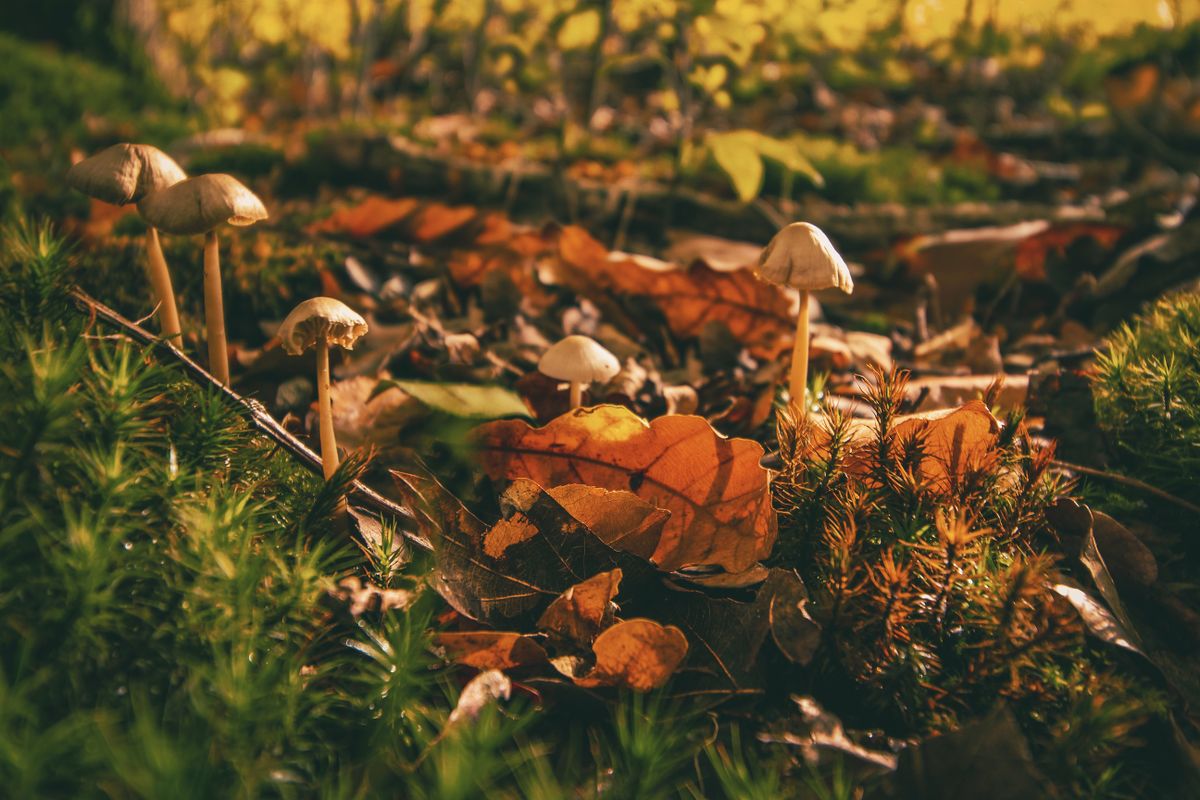
The forests around Sundsvall and Härnösand on the High Coast are regarded as some of the best chanterelle territory in Sweden, with mixed birch-pine woodland and the damp microclimate produced by the proximity to the Gulf of Bothnia. Dalarna, particularly the forests around Lake Siljan and the Orsa highland, produces excellent porcini (Karl Johan svamp) alongside chanterelles. The forests of Småland – darker, older, more dramatic than the open birch woods of the north – are particularly good in September for porcini and hedgehog mushrooms (Hydnum repandum).
For cloudberries, go north. The bogs of Norrbotten and the mountain marshes of Jämtland are the main production areas. The window for cloudberry picking is narrow – about two weeks in late July – and the locations remote. Plan accordingly.
📚 Learn Before You Pick
The Swedish Tourist Association (STF) and various regional nature organisations run foraging walks throughout August and September in most parts of the country. These half-day walks with an expert guide are the single best way to build confident identification skills. They typically cost 200–400 SEK and end with a communal meal made from the day's harvest. Book them through Naturkartan or regional tourist offices.
Why Foraging Changes How You See a Landscape
There's something that happens after a few hours of foraging that has nothing to do with the food. Your attention shifts. You stop looking at the landscape as scenery and start reading it as a system of clues. The colour of the moss changes under a good chanterelle spot. The forest floor smells different twenty metres before you find a porcini. Your eyes start working at a scale they don't normally operate at – not horizon-scanning, but ground-level, slow, attending to individual square metres rather than panoramas.
This attentional shift is, I think, what people are really after when they talk about foraging as a practice rather than a method of food acquisition. It returns you to a perceptual relationship with a landscape that most of us have spent our whole lives losing. You go into the forest for the mushrooms. You come out having spent three hours in a state of complete, involuntary presence. That's not nothing.
🧳 Planning your trip? Our autumn packing list covers foraging gear in detail.
🍽️ Paired with our Swedish food and culture guide — what to do with everything you pick.
What to Do With What You Find
The foraging experience is only half complete if you walk back to your accommodation with a basket of chanterelles and no idea what to do next. The good news is that Swedish foraging cuisine is unpretentious and the techniques are learnable in an afternoon.
Chanterelles want butter, heat and salt — nothing more, to begin with. Melt a generous amount of butter in a heavy pan, add the cleaned mushrooms, cook over medium-high heat until the liquid they release has evaporated and they begin to colour. Add salt, maybe a little thyme, possibly a splash of cream. Eat on toast or tossed with pasta. The dish takes fifteen minutes and tastes like the forest distilled into something edible.
Lingonberries, picked in September, keep raw in the fridge for weeks — the natural benzoic acid content is a preservative. The Swedish treatment is to stir them with sugar (rårörda lingon: raw stirred lingonberries) and serve cold alongside meatballs, game or pancakes. No cooking required. The texture stays intact and the flavour is sharper than the jam version.
Cloudberries — hjortron — are more delicate. Pick them on the day you plan to eat them; they deteriorate quickly. Eat raw with whipped cream or fold into vanilla ice cream. They have a complex flavour — honey, apricot, a slight sharpness — that is unlike anything else available in the European food repertoire.
📱 Best Apps for Swedish Foraging
iNaturalist — photograph a mushroom or plant and receive species identification suggestions from the global community. Treat as a first guess, not a final answer. Naturkartan — Swedish outdoor app with community foraging reports and trail maps. Svampguiden — Swedish mushroom identification guide, available in Swedish but with excellent photographs for visual matching.
Swedish Foraging Calendar at a Glance
| Species | Season Peak | Best Region | What to Look For |
|---|---|---|---|
| 🍄 Chanterelles | Late July – Sept | Dalarna, Hälsingland, northern forests | Gold-yellow, trumpet shape, apricot smell |
| 🍄 Porcini (Karl Johan) | Aug – Sept | Småland, mixed birch-spruce forests | Brown cap, thick white stem, nutty smell |
| 🫐 Blueberries | July – Aug | Everywhere with forest understory | Low shrub, deep blue berries |
| 🍓 Wild strawberries | June – July | Clearings, roadsides, forest edges | Tiny, intensely sweet, low growing |
| 🍒 Lingonberries | Aug – Sept | Heathland, forest edges, nationwide | Small red berries on low evergreen shrub |
| 🍊 Cloudberries | July (short) | Northern bogs, Lapland, Norrland | Orange when ripe, singular berry, boggy ground |
Mistakes First-Time Foragers Make in Sweden
❌ Picking anything you can't positively identify
Sweden's deadly mushrooms — the destroying angel (Amanita phalloides) and its relatives — are in the forest. They don't look exotic or obviously dangerous. Before your first foraging trip, learn the three or four most common edible species thoroughly (chanterelle, porcini, funnel chanterelle) and ignore everything else. The rule experienced Swedish foragers use: if you are uncertain, leave it. A missed chanterelle costs nothing. A misidentified destroying angel is fatal.
❌ Going to the wrong forest type
Chanterelles grow in the transition zone between birch and spruce forest, often where moss covers the ground and the trees are mature but not dense. Pure plantation spruce forest yields very little. Old mixed forest — the kind with moss-covered boulders, varying tree ages and some open canopy — is the right habitat. Learn to read the forest before walking into it randomly.
❌ Arriving in July expecting mushrooms
The chanterelle season is triggered by warm summer rain after the ground has warmed. In most of Sweden, July is the earliest you'll find them — August and September are more reliable. In northern Sweden (above Sundsvall), the season starts and ends later. Check the Artportalen database (artportalen.se) for recent chanterelle observations in the region you're visiting — it shows exactly where people are finding them this week.
Frequently Asked Questions: Foraging in Sweden
Is foraging legal in Sweden?
Yes — foraging for wild berries, mushrooms and plants is explicitly covered by Allemansrätten, Sweden's right to roam. You can pick from any land in Sweden in any quantity for personal use. This includes private farmland and forests. Commercial harvesting has different rules, but personal foraging is unconditional and one of the great pleasures available to any visitor to Sweden.
When is the best time to forage in Sweden?
Late July through October covers the main season. Blueberries peak in July–August. Chanterelles appear from late July in good years and run through September. Lingonberries are ripe in August–September. Porcini and other boletes peak in August–September. Cloudberries ripen in July in the northern bogs — an early season and a short window. October brings the last mushrooms before the first frosts end the season.
What mushrooms grow in Swedish forests?
Chanterelles (kantareller) are the most abundant and most prized — gold-yellow, trumpet-shaped, smelling of apricot. Porcini (stensopp) grow in birch and spruce forest from August. Funnel chanterelles (trattkantareller) appear in late September through November, often in enormous quantities. Karl Johan's mushroom (king bolete) is another prized species. Sweden has very few deadly mushrooms once you exclude the destroying angel — but reliable identification is essential. Never eat anything you cannot positively identify.
What berries can I find in Sweden?
Blueberries (blåbär) are everywhere in the forest understory from July — smaller and more intensely flavoured than cultivated varieties. Lingonberries (lingon) ripen in August–September on open heathland and forest edges. Cloudberries (hjortron) grow in the northern bogs in July — orange when ripe, intensely flavoured, and the most prized berry in Swedish cuisine. Wild strawberries (smultron) appear in clearings and verges from June. Raspberries (hallon) along forest edges in July–August. If you are planning a spring visit, our Sweden Spring guide covers the best timing, what to expect and what opens in April and May.
Which region of Sweden is best for foraging?
Dalarna, Hälsingland and the boreal forests of northern Sweden are the richest chanterelle territory. The forests around Sundsvall and further north hold enormous quantities in a good August. Småland's dense forest is excellent for porcini. The far north of Sweden — Lapland and the areas around Jokkmokk — has the best cloudberry bogs, though access requires some knowledge of bog navigation. Almost any Swedish forest will yield something pickable from late July onwards.
→ Also see our Dalarna guide.
→ Also see our fishing-sweden" style="color:var(--aurora);font-weight:600;">fishing in Sweden guide — salmon, pike, sea trout and ice fishing across the country.