Ingemar Stenmark grew up in Tärnaby, a village of 700 people in the Swedish mountains, and went on to win 86 World Cup races — a record that has stood for over forty years. Sweden has not been producing great skiers by accident. The mountains are real, the snow is reliable and the skiing culture runs deep enough that it barely needs to advertise itself to the rest of Europe.
That the rest of Europe has largely not noticed is, depending on your perspective, either a problem or an advantage. The slopes at Åre on a Tuesday in February are not the slopes at Verbier on a Tuesday in February. The queues are shorter, the lift infrastructure is modern, the prices are lower, and the après-ski is conducted with the particular Swedish combination of earnestness and genuine warmth that makes it hard to leave a bar at a reasonable hour.
This guide covers the main resorts, what each one is actually like, and who each one suits. It does not pretend all Swedish resorts are equal — they are not. It starts with the one that is genuinely exceptional, works through the others in order of scale and significance, and ends with some practical reality about costs and getting there.
Why Ski Sweden at All
The honest comparison point is the Alps. Switzerland, France, Austria — these are the default assumption for serious skiing in Europe, and for good reason. The vertical drops are larger, the total pisted terrain is greater, and the resort infrastructure has been refined over a century of international tourism.
Sweden's counter-argument is not that it's better than the Alps in absolute terms. It's that it's better value, less crowded, has reliable cold-temperature snow rather than the increasingly warm and icy conditions that plague lower Alpine resorts in early and late season, and offers something the Alps cannot: the particular character of the Scandinavian winter. When you ski in Åre, the trees are frosted birches and pines, not Alpine firs. The light in the afternoon has a blue quality that comes from being this far north. The village is an actual Swedish village, not an architecture firm's idea of what a ski village should look like.
Sweden also receives snow at altitude that stays cold and powdery rather than crusting into ice. The season runs long — Åre typically keeps at least some slopes open from late November to early May. And for travellers from the UK or northern Europe, the flights are short and direct, the language barrier is essentially zero, and the transfer from airport to slopes is straightforward.
Åre: The One That Is Genuinely Exceptional
Åre, Jämtland
In 2019, Åre hosted the FIS Alpine World Ski Championships — the Olympics of non-Olympic ski years. Mikaela Shiffrin, Petra Vlhová, Alexis Pinturault, the best technical skiers in the world spent two weeks on these slopes, and the mountain held up. The fact that Åre was chosen over more famous Alpine venues for the Championships is a statement about the quality of the terrain and the resort's operational credibility.
The mountain divides into three main areas. The main Åre Björnen sector handles the bulk of the intermediate skiing — long cruising reds and blues with good pitch, properly maintained pistes and the kind of variety that keeps good skiers entertained across a week without repeating the same run twice. The Åre By area above the village is where the steeper terrain is concentrated, including the seriously challenging black runs off the summit that test anyone who skis them seriously. The Duved sector, a short bus ride down the valley, is quieter and more appropriate for beginners.
The village itself is worth noting. Åre has a genuinely charming old centre around the church and the lake, a main street with shops and restaurants that function year-round, and an après-ski scene built around permanent residents rather than seasonal pop-ups. Broken does the pizza and rock music. Bygget does the craft beer. The Diplomat does the kind of expensive dinner that makes sense after you've spent a week burning through the mountain. The gondola runs until 3am on Friday and Saturday nights in high season, which tells you something about how seriously the village takes the post-skiing hours.
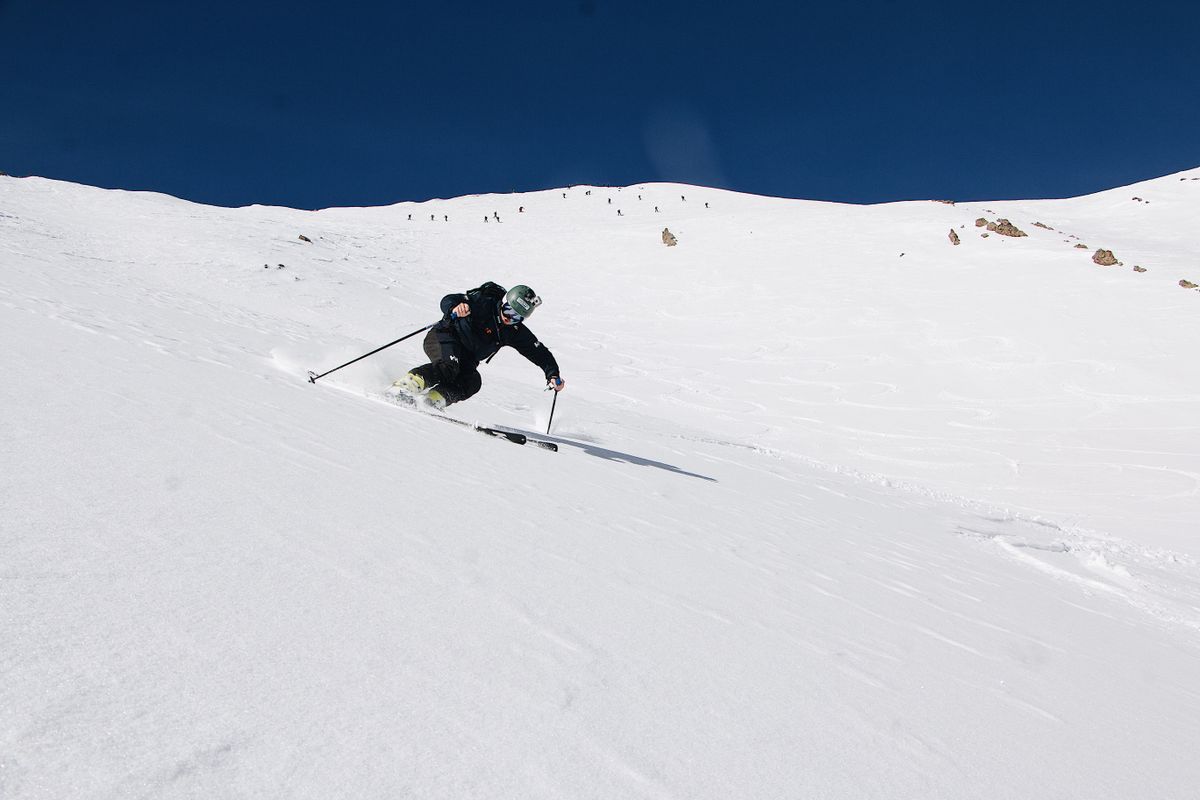
What Åre does not have in Alpine quantities is off-piste terrain. The mountain is largely forested rather than open above the tree line, which means the powder between the trees is excellent but the wide, open mountain bowls of the big French resorts are not here. For skiers whose priority is big mountain off-piste, Åre is not the answer. For skiers who want excellent groomed piste skiing, a real village, and cold reliable snow across a long season, it is.
Getting to Åre
The overnight train from Stockholm Central departs around 22:00 and arrives at Åre station at 08:00 the following morning — you sleep on the way and arrive with a full ski day ahead. Scandinavian Mountains Airport, opened in 2019, receives direct flights from Stockholm, Gothenburg, Oslo and some seasonal European routes. Ski-in accommodation is available at Åre By and Åre Björnen. Book accommodation and lift passes together through SkiStar for the best pricing.
Sälen: Scandinavia's Biggest Resort Cluster
Sälen, Dalarna
Sälen is not one resort. It is seven resorts arranged across a valley in Dalarna, most operated by SkiStar under a unified lift pass system. The combined area, roughly 200 kilometres of piste, makes it the largest ski area in Scandinavia by volume of runs — though the individual resorts within it are modest in isolation.
The mountain in Sälen is lower and rounder than Åre. Maximum vertical is 350 metres, compared to Åre's 700. The terrain is primarily blue and red, with limited genuine black-run challenge. What Sälen lacks in mountain drama it compensates for in organisation, variety across the seven areas, and world-class children's facilities that make it the default choice for Swedish families with young children. The ski schools are well-structured, the child-care options are extensive, and the resort villages have been designed with the assumption that most guests are travelling with children and need the practicalities to work seamlessly.
Lindvallen is the main hub — it has the most accommodation, the best après-ski and the most consistent grooming. Hundfjället and Tandådalen are connected by lift to each other, creating a larger ski area without changing hotels. Stöten has a small-resort character that suits those who find Lindvallen too busy. Kläppen, at the northern end of the Sälen valley, is independent of the SkiStar system and feels different — smaller, quieter, with better tree skiing.
Sälen is also where the Vasaloppet begins. The oldest and largest cross-country ski race in the world starts in Sälen on the first Sunday of March and finishes 90 kilometres away in Mora. The week of Vasaloppet, Sälen has a particular atmosphere — part racing event, part Swedish national celebration — that has nothing to do with alpine skiing and everything to do with the Swedish relationship with winter sport as something genuinely embedded in culture rather than simply a leisure pursuit.
Riksgränsen: The One Above the Arctic Circle
Riksgränsen, Lapland
Riksgränsen sits at 68 degrees north, above the Arctic Circle, on the Swedish-Norwegian border. The mountain is not large by the standards of the other resorts in this guide. What it offers instead is something no other ski resort in Europe provides: a proper ski season that runs until late June, with skiing in conditions of continuous daylight under the midnight sun from May onward.
Skiing at Riksgränsen at midnight in May is not a gimmick. The sun is genuinely up, the snow is genuinely skiable, and the experience — descending a mountain in full light at a time when the rest of Europe is asleep — is unlike anything available at lower latitudes. The resort is small enough that it fills quickly in the late-season window, and it's worth booking well ahead if April or May is the target.
The off-piste terrain at Riksgränsen is extensive and serious — this is not a resort where off-piste means slipping between two marked runs. The open fjell above the lifts offers proper Arctic big-mountain skiing for those with the skills and guides to navigate it. The avalanche risk in spring requires proper precautions and local knowledge. Do not go off-piste here without a qualified guide if you don't know the mountain.
The resort itself is tiny — a few hundred beds, one main hotel (the Riksgränsen Hotel, which has been operating since 1902), a handful of self-catering apartments. The isolation is part of the experience. The train journey from Stockholm — 20 hours through Swedish and Norwegian landscape, arriving at Riksgränsen station which is literally inside the hotel building — is one of the genuinely good long-distance train journeys left in Europe.
Branäs: Värmland's Family Resort
Branäs, Värmland
Branäs sits in Värmland, about an hour and a half north of Karlstad, and operates on a different scale from Åre or Sälen. Thirty-five runs, a 260-metre vertical, and a resort village built primarily around self-catering accommodation and a ski school that has a strong local reputation. It is not a destination for experienced skiers looking for challenge. It is a destination for families making their first or second ski trip, beginners who want instruction without the pressure of a large resort, and anyone within driving distance of Gothenburg or Stockholm who wants to spend a weekend on snow without the complexity of travelling to the larger mountains.
The quality of the facilities relative to the modest scale is notable. The snowmaking is extensive and covers most of the mountain, which means the season is more consistent than the altitude would otherwise allow. The ski school has English-speaking instructors throughout the winter. The accommodation is purpose-built and functional.
Vemdalen: The Underrated Option
Vemdalen, Härjedalen
Vemdalen is operated by SkiStar (the same company that runs Åre and most of Sälen) but receives considerably less international attention than either. This makes it quieter than both during peak season, with the same lift infrastructure and grooming standards at meaningfully lower prices and shorter queues.
The terrain across the three areas is genuinely varied. Björnrike handles the steeper skiing with a 475-metre vertical and some testing black runs. Vemdalsskalet is the most beginner-friendly of the three. Klövsjö-Storhogna, the smallest, has a genuinely traditional Swedish village character that the purpose-built resort areas sometimes lose. A single SkiStar pass covers all three areas, and the bus connections between them run reliably through the day.
Vemdalen also gets consistent snowfall from the Norwegian weather systems moving east — cold, dry powder rather than the slightly damper snow that affects lower-altitude resorts. February and March are the best months, when the snowpack is deep and the daylight is returning enough to make full-day skiing possible.
Cross-Country: The Other Swedish Winter Sport
Sweden's relationship with skiing is at least as much about cross-country as downhill. The Vasaloppet — 90 kilometres from Sälen to Mora, over 15,000 entrants in the main race, held every year since 1922 — is the largest cross-country ski race in the world and one of the oldest endurance events of any kind still running. For Swedes, cross-country skiing is not exotic or specialist. It is what you do in winter. Many people have skis in the garage the way they have bicycles.
For visitors, this matters because the trail networks around Swedish ski resorts are excellent and largely free to use. The groomed cross-country tracks around Åre, Sälen and Vemdalen extend for hundreds of kilometres through the forest and open landscape. Hiring cross-country skis costs 200–400 SEK per day, and the tracks are maintained to the standard that allows total beginners to pick it up within an afternoon on the flat sections, while the longer trail routes challenge experienced skiers properly.
If you are visiting Sweden in winter for the first time and have never tried cross-country skiing, the quieter forest tracks around Sälen in early February — before the Vasaloppet traffic arrives — are an excellent place to try it. It is a different physical experience from downhill: slower, quieter, more aerobic, with more time to look at the forest and the light and the particular silence of being on snow in the trees.
When to Go
December and January are the darkest months. At Åre (63°N), the sun barely clears the horizon in December and the skiing days are short — meaningful light from around 9am to 2:30pm. The snow is cold and good, but the short window limits what you get from a day on the mountain. Many Swedish skiers prefer these months for the atmosphere and the absence of school-holiday crowds, but for visitors wanting maximum skiing, February onwards is better.
February and March are the peak months. The days have lengthened significantly, the snowpack is at its deepest, conditions are most consistent, and the mountain light — low sun at an angle through the trees and across the white slopes — is at its most dramatic. This is high season, and accommodation costs reflect it. Book at least two to three months ahead for any of the major resorts.
April is the underrated month. Crowds thin as the school holidays end, prices drop, and the snow is still excellent at altitude. Åre and Riksgränsen are both good in April. The light is now generous — Åre gets 14+ hours of daylight by the end of April — and the temperatures are cold enough at altitude for snow to remain in good condition.
May and June are Riksgränsen only. The midnight sun season at the Arctic Circle resort, with 24-hour daylight and skiing in T-shirts if the afternoon sun is strong, is a genuinely unusual experience worth considering if the dates align.
What It Costs
The cost of a Swedish ski holiday compares well with the Alps. A SkiStar day pass for Åre or Vemdalen costs 795–950 SEK (€70–85) per adult, slightly less for Sälen. Multi-day passes reduce the daily rate: six days at Åre is around 4,200 SEK (€370) per person.
Ski hire from a resort shop costs 400–700 SEK per day for a standard adult set (skis, boots, poles). Ski school group lessons run 700–1,000 SEK for a half day. Private instruction starts around 2,000 SEK per hour.
Accommodation ranges from bunk-bed dormitories in resort hostels at 300–500 SEK per person per night to well-appointed ski-in hotel rooms at 1,500–2,500 SEK per night. Self-catering chalets and apartments — the most common choice for Swedish families — run 1,000–3,000 SEK per unit per night depending on size and location. Booking directly through SkiStar often gives the best bundled pricing for accommodation and passes together.
Eating: a lunch on the mountain costs 120–180 SEK for soup and bread at a self-service station, or 180–280 SEK for a hot main at a sit-down restaurant. Dinner in the village ranges from a pizza or burger at 150–200 SEK to a full restaurant meal at 300–500 SEK per person including drinks. Budget 1,000–1,500 SEK per person per day for everything once on the mountain.
SkiStar Guest Card
All SkiStar resorts (Åre, Sälen's main areas, Vemdalen) use a single guest card system. Buy once, load your passes and ski hire, and swipe on all lifts without queuing at ticket windows. Download the SkiStar app before arriving — it shows live lift wait times, piste conditions, and lets you manage your card remotely.
Common Mistakes
Going in December expecting long ski days. The light is short and the atmosphere is excellent, but if skiing time is the priority, February or March are the right months.
Choosing Sälen expecting Åre's mountain. Sälen is well-designed and better for families, but it is lower, flatter and less challenging than Åre. The two resorts serve different needs and the difference matters if you ski to a good standard.
Not booking accommodation early enough for peak periods. Swedish school holidays — particularly the sportlov, the dedicated sports week in February that falls in different weeks across different counties — fill the major resorts months ahead. If you're visiting in February, book by October.
Skipping the cross-country option. If you've never tried it, a half-day on the groomed tracks around whichever resort you're staying at is one of the more useful things you can do in a week. It gives you access to parts of the winter landscape that the lift system doesn't reach.
Driving when the train is better. The overnight train to Åre takes the same elapsed time as flying (door to door), costs less, lands you in the village rather than an airport an hour away, and you arrive rested rather than having started the day at 4am for a 6am departure.
Frequently Asked Questions
What is the best ski resort in Sweden?
Åre, without much debate, for experienced and intermediate skiers who want the best mountain and a proper village. Sälen for families with young children who need the infrastructure and gentler terrain. Riksgränsen for the specific experience of Arctic skiing and late-season midnight sun.
How does Swedish skiing compare to the Alps?
Smaller vertical drops and less total terrain than the major Alpine resorts, but meaningfully less expensive, significantly less crowded, better cold-temperature snow reliability, and a different character entirely. Sweden does not compete with Chamonix or Val d'Isère on size. It competes on the overall quality of a winter week: the village, the food, the costs, the atmosphere, and the particular visual experience of skiing in northern Scandinavia.
Is there good off-piste skiing in Sweden?
At Riksgränsen, genuinely excellent and serious off-piste on open Arctic terrain. At Åre, reasonable tree skiing in the forest areas between marked runs. At Sälen and Vemdalen, limited. If off-piste powder is the primary reason for a ski trip, Riksgränsen in April or May is the right answer.
Do I need to speak Swedish to ski in Sweden?
No. English is spoken universally at all ski resorts, including ski schools, lift operators and restaurants. The SkiStar app and website are available in English. Signage in Åre and Sälen is bilingual or primarily visual. You will not need Swedish to navigate any aspect of a ski holiday at these resorts.